How Pocket Big Brother Tracks the House
A practical breakdown of receipts, power changes, source feeds, and timeline entries — and why separating those signals by weight is the whole method.
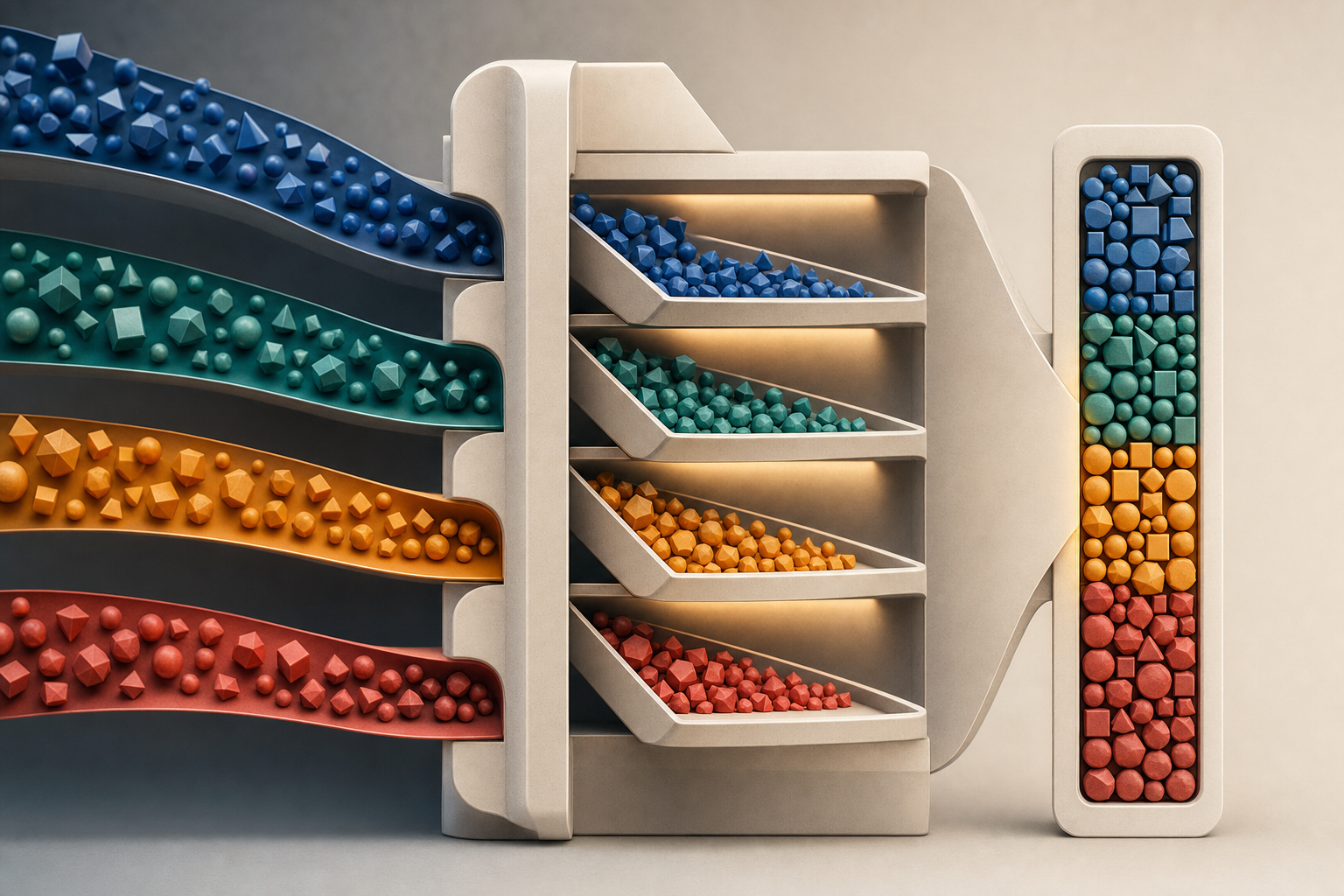
Pocket Big Brother is built around one idea: a receipt. A receipt is any useful signal that helps explain what is happening in the house — a live-feed update, a power change, a status change, a source article, a social post, or a Reddit thread that captures active fan discussion. The method is not collecting signals. Everyone collects signals. The method is sorting them by weight and keeping them sorted.
Different signals do different jobs
The site splits those signals into separate surfaces on purpose, because treating them as interchangeable is how you end up with a confident-sounding feed that is quietly wrong.
- The power board holds current game state: who has HOH, who is nominated, where the veto landed.
- The cast board holds people and their statuses.
- The latest receipts are short, live feed updates — the raw texture of the day.
- The live almanac turns activity into patterns, like loud days and high-signal windows, so you can see when a season got busy, not just what happened.
- The timeline is the combined ledger that puts all of it in one reverse-chronological stream.
That separation matters because the signals do not weigh the same. A feed update tells you what was seen on the feeds. A social post might show fan reaction, or it might just be one person's hot take. A Reddit thread shows conversation volume, which is a different thing from truth. A confirmed state event — an HOH win, a nomination, a veto, an eviction, a cast-status change — is the heaviest signal we have. The timeline can display all of these side by side without pretending a spicy tweet equals a locked-in eviction.
Why state events are the backbone
Most of what makes this archive durable comes down to one decision: power and cast changes are stored as state events, not as one-off posts that scroll away. During the season, agents and admins update house data through protected endpoints and the CLI. Each confirmed change is written as a state event.
That does two things at once. First, the change appears in the timeline immediately, in the correct Pacific-time slot, so a power shift shows up the moment the house data moves. Second, that same event stays available later for archive work. A nomination that mattered in week 5 is still in the record after the finale, in order, with the receipts around it. The point is not only to show what is current. It is to preserve how the season moved — and you cannot reconstruct movement from a feed that only ever shows "now."
This is also the honest answer to a fair question: why not just aggregate Jokers, Reddit, and Twitter into one wall? Because a wall flattens everything to the same weight and loses the spine. By keeping confirmed game state as structured events, the season has a backbone you can hang the chatter on. The chatter explains the move; the state event is the move.
What this looks like in practice
Say the house takes a shot at a strong player. Here is how the surfaces divide the labor:
- The feed updates capture the lead-up — who floated the idea, who got nervous, who counted votes at 1am.
- A state event records the actual nomination and, later, the actual eviction.
- Social and Reddit rows show how loud the reaction got and whether the fanbase saw it coming.
- The almanac flags the day as high-signal if the volume spikes.
- The timeline stacks all of it in order so you can see the move form, not just the move land.
None of those rows lies about what it is. The feed update is labeled as an observation. The state event is labeled as confirmed. The social post is labeled as a social post. That labeling is the trust mechanism. You are never asked to take a rumor and a result as equals.
What it is and is not
We try not to overclaim. The receipts come from human updaters and public sources, which means they reflect what was seen and typed, not a perfect God's-eye view of the house. Feeds get cut. Conversations get missed. The method does not fix that; it just keeps honest about it by preserving the source link and the lane on every row, so you can always go check.
What the system does deliver is continuity. A live season is chaos. A finished season — like BB27, with its 18,037 logged updates — should still read as a path you can follow from first night to final vote. If you want to see the method's output after a season ends, read the BB27 archive starting point. If you want to see where all these surfaces converge during a live season, that is the timeline. This note is the why underneath both.