The House Timeline, Explained
What the everything feed actually does: one Pacific-time ledger that merges updates, power changes, media, social posts, and Reddit into a source-tagged stream you can filter.
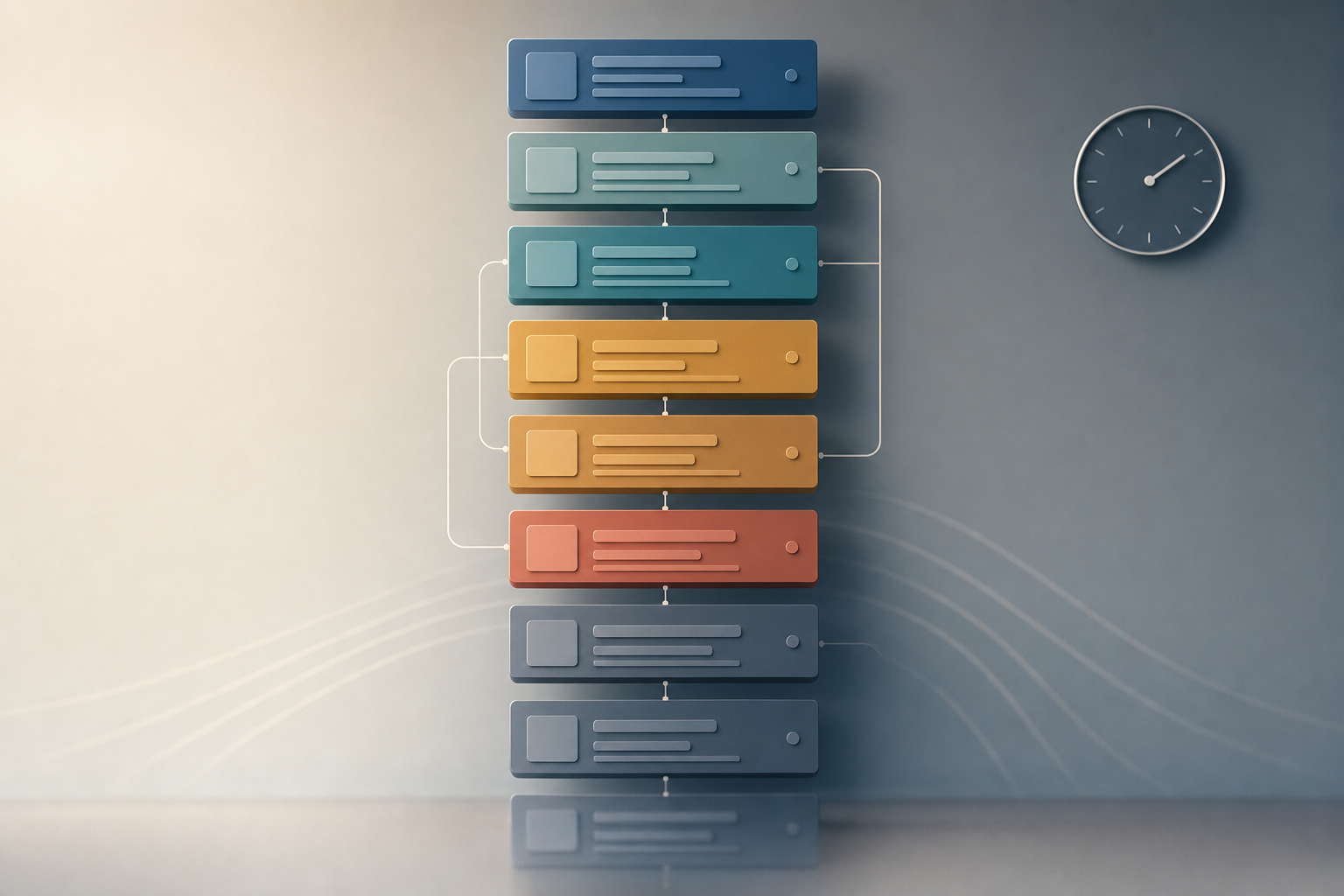
The house timeline is the site-wide ledger. It exists for one reason: feed season makes you tab-hop between live updates, social pages, news sources, Reddit threads, and the power board, and that hopping is where context dies. The timeline puts every signal into one reverse-chronological stream so you can scan a single day top to bottom and actually understand the shape of it.
This is the part that needs to be clear, because "a feed that combines stuff" sounds like thin aggregation. It is not. Aggregation reposts other people's content and calls it a day. The timeline does something narrower and more honest: it tags every row by source lane, keeps the link back to the original, and lets the rows sit next to each other so you can weigh them.
The source lanes
Every row belongs to a lane, and the lane is always visible. That is the whole trust model.
- Updates are live-feed receipts: what was actually seen and typed on the feeds.
- Power and cast rows are state events. They are created when the house data itself changes: a new HOH, a nomination, a veto outcome, an eviction, a cast-status change. These are not chatter; they are confirmed game state.
- Media rows come from enabled news, blog, and podcast sources, with a preview to help you scan and a link out to the real article.
- Social rows come from tracked X and Bluesky source feeds.
- Reddit rows come from tracked Big Brother threads and comments, which are most useful as a volume signal: how loud is the room about a given moment.
You can view the whole stream or filter down to one or more lanes. Want only confirmed power moves with no social noise? Filter to power and cast. Want to feel the room's reaction to a blindside? Pull up social and Reddit for that window.
Why everything runs on Pacific time
The timeline uses Pacific time on purpose, because feed-watching is organized around the house clock, not your local one. That keeps daily sequences legible: morning wake-up calls, afternoon game talk, evening ceremonies, and late-night backyard conversations all land where regular feed watchers expect them. Mixing time zones in a single ledger is a fast way to scramble cause and effect, and cause and effect is the entire point of a timeline.
That ordering is also what lets the timeline do real work. When a nomination ceremony posts as a power row at 5pm, the conversations that follow it at 5:30, 7:00, and midnight stack directly underneath in the order they happened. You can watch a plan form, wobble, and either hold or collapse, instead of reading a tidy after-the-fact summary that hides the wobble.
Density without losing trust
The design goal is high density that you can still believe. A few rules enforce that:
- The source is always obvious. A row should never make you guess whether you are reading a confirmed game event, a feed observation, or a fan reaction. Those are different weights and the lane label keeps them honest.
- No fake-live language. The timeline does not dress up an old item as breaking. Timestamps are real, and the row reflects when the thing actually happened.
- The link survives. Media previews and social images are there to make scanning faster, but the link back to the original stays. The timeline is a way into sources, not a replacement that strips credit.
How to actually use it
During the season, the timeline is the fastest way to answer one question: is this a story or is this nothing? A single spicy social post on its own is just chatter. The same post sitting above a confirmed nomination row and a spike of Reddit volume on the same Pacific-time evening is part of a real house shift. The value is not any single row. It is the ability to see whether a row has company.
Between seasons, the same ledger becomes archive material. Because power moves are stored as state events rather than one-off posts, a swing that mattered in week 6 is still sitting in the record months later, in order, with its receipts around it. That is how a live stream turns into season history without anyone having to rebuild it from memory.
If you want the layer underneath this — how the power board, cast board, receipts, and almanac feed the timeline in the first place — read how Pocket Big Brother tracks the house. The timeline is where all of those jobs finally meet in one column.